When a loved one is seriously ill, one of the hardest questions families quietly carry is: “How will we know when the end is near?” It is a question rooted not in fear alone, but in love, responsibility, and the need to be present at the right moment.
While every person’s journey is different, there are certain physical, emotional, and medical signs that often appear when someone is approaching the final stage of life. These changes do not follow a strict timeline, but they can offer families important guidance and help them prepare emotionally and practically.
Understanding these signs can also reduce panic. Many families mistake natural end-of-life changes for sudden emergencies, when in reality the body is often following a gradual, predictable process. With hospice support, these moments become less frightening and more focused on comfort, dignity, and connection.
Table of Contents
Important Note
Not every change in a seriously ill person means death is immediately near. Some symptoms develop gradually over days or weeks, while others appear only in the final hours. The purpose of understanding these signs is not to predict an exact time, but to help families recognize when comfort-focused care becomes the priority. Hospice professionals can guide families through each stage with clarity and emotional support.
Overview of Signs Death Is Near
As the body begins to approach the end of life, it gradually slows down essential functions. This process is often called “active dying” when it enters its final phase. During this time, the body conserves energy, reduces organ activity, and begins prioritizing internal comfort over external responsiveness.
Families may notice subtle changes first—less interest in food, longer sleep periods, or reduced communication. Over time, these changes become more pronounced as the body continues to shut down naturally.
These signs are not random. They are part of a biological process that medical professionals working in palliative care and hospice settings recognize as expected and normal in the final stage of life.
Early Physical Changes in the Dying Process
One of the first noticeable signs that death may be approaching is a general decline in physical strength. Activities that once felt simple—sitting up, talking, or eating—may become difficult or exhausting.
The body begins redirecting energy away from movement and digestion. As a result, fatigue increases significantly. This is not ordinary tiredness but a deep, persistent exhaustion that rest does not fully relieve.
At this stage, families often begin to wonder if something has changed. The answer is usually yes—but not necessarily in a sudden or dramatic way. It is a gradual shift that reflects the body’s natural slowing process.
In many cases, patients receiving in-home hospice care are closely monitored during this stage so that comfort can be adjusted as needed.

Loss of Energy and Increased Sleeping
As death becomes closer, sleep increases significantly. The person may spend most of the day asleep and appear difficult to wake at times. Conversations become shorter, and responses may be delayed or minimal.
This happens because the brain is receiving less energy and oxygen, and the body is conserving resources for vital organs. Families often worry that their loved one is “giving up,” but in reality, this is a natural and expected stage of the process.
Even during deep sleep, many hospice professionals believe that hearing may still be partially active. This is why gentle conversation, reassurance, and presence remain important.
Support from a structured hospice care team can help families understand what level of responsiveness is normal at each stage.
Changes in Appetite and Hydration
Another early sign that death may be near is a noticeable decrease in appetite and thirst. Meals may be skipped, and interest in food gradually fades. This can be emotionally difficult for families, especially when feeding a loved one has been a long-standing expression of care.
However, the body’s need for energy decreases significantly during this phase. Forcing food or fluids can sometimes lead to discomfort rather than benefit.
Instead, care shifts toward comfort-based support such as oral care, lip hydration, and small sips of water if the person is able and willing.
Understanding resources like hospice eligibility requirements can help families recognize when this stage begins and ensure support is available early.
Important Note
Changes in appetite, sleep, and energy can be emotionally distressing for families, especially when they feel uncertain about what is normal. It is important not to interpret these changes as immediate suffering or distress. In many cases, the body is simply reducing its needs. Hospice care teams are trained to help families understand these changes and ensure that comfort remains the top priority.
Breathing Pattern Changes
One of the most noticeable signs that death may be approaching is a change in breathing. Families often describe this as one of the most emotionally difficult symptoms to witness because it can sound irregular or unusual compared to normal breathing patterns.
As the body weakens, breathing may become slower, uneven, or more shallow. Some people experience long pauses between breaths followed by deeper respirations. This pattern is often referred to in medical settings as Cheyne-Stokes breathing, and it is commonly seen in the final stage of life.
In other cases, breathing may become noisy due to the buildup of natural secretions in the throat that the body can no longer clear effectively. This is sometimes called the “death rattle,” and although it can sound alarming, it does not usually indicate pain or distress for the patient.
Hospice professionals often reassure families that these changes are a normal part of the body’s natural shutting-down process. Medications, repositioning, and comfort-focused care can sometimes reduce discomfort and help improve breathing ease.
Families who are supported through in-home hospice care often feel more prepared when these changes are explained in real time by trained nurses.
Circulation and Skin Changes
As circulation slows, the body begins prioritizing blood flow to vital organs like the heart and brain. This means less blood reaches the skin, hands, feet, and legs.
Families may notice that the skin becomes cooler to the touch, especially in the extremities. The color of the skin may also change, appearing pale, bluish, or slightly mottled. These changes are medically known as peripheral shutdown and are a normal part of the dying process.
While these physical signs can be distressing to see, they do not necessarily mean the person is experiencing discomfort. Instead, they indicate that the body is conserving energy and gradually slowing down its systems.
Gentle touch, warm blankets if needed, and a calm environment can provide reassurance and comfort during this stage. Many families find emotional support by understanding how different levels of hospice care guide symptom management during the final phase of life.

Confusion, Restlessness, and Changes in Awareness
As oxygen levels fluctuate and organ systems begin to slow, changes in awareness are common. Some individuals may appear confused, speak less coherently, or seem disoriented about time and place.
Others may become restless, picking at sheets, moving their hands repeatedly, or attempting to get out of bed. This restlessness is often not intentional but rather a response to internal changes in the body and brain.
At the same time, there may be moments of surprising clarity. A person who has been mostly unresponsive may suddenly open their eyes, speak a few meaningful words, or recognize family members clearly. These moments can feel deeply emotional and are sometimes referred to as “terminal lucidity.”
Hospice teams are trained to help manage restlessness through comfort measures and, when necessary, medication adjustments to ensure the patient remains calm and peaceful.
Families often find reassurance in services such as grief support programs, which help process emotional reactions both during and after this stage.
When Families Should Be Concerned
While many changes near the end of life are expected, there are situations where families may feel uncertain or worried. Instead of focusing on “panic signs,” hospice care emphasizes communication and support.
If a loved one appears to be in visible distress, such as persistent grimacing, severe agitation, or signs of uncontrolled pain, it is important to contact the hospice team immediately. Adjustments in care can often be made quickly to restore comfort.
However, many physical changes—such as decreased eating, increased sleeping, and irregular breathing—are not emergencies. They are expected parts of the natural dying process.
Understanding this distinction helps families shift focus from fear to presence. Being present, speaking softly, and offering reassurance can be more meaningful than attempting to intervene medically at every change.
Support from a dedicated hospice care team ensures that families are never alone in interpreting these signs.
The Final Stage: What Happens as Death Becomes Very Near
As a person moves into the very last stage of life, usually hours to a few days before death, the changes that began earlier become more pronounced. The body continues to slow down, and responsiveness may significantly decrease. This stage is often referred to by hospice professionals as “active dying.”
Breathing may become increasingly irregular, with longer pauses between breaths. The pulse becomes weak and sometimes difficult to feel. Blood pressure drops further as circulation continues to decline. The person may no longer respond to voices or touch, although hearing may still remain partially intact.
At this stage, the focus of care is entirely on comfort. Families are encouraged to provide a calm environment, speak softly, and remain present without feeling pressure to “do” anything beyond offering reassurance and love.
These changes are often supported and explained in detail through structured services like in-patient hospice care, where medical teams monitor comfort continuously.
Emotional Impact on Families
Seeing a loved one near the end of life can bring a complex mix of emotions—sadness, relief, fear, love, and even moments of acceptance. It is common for family members to feel overwhelmed as the physical signs become more visible.
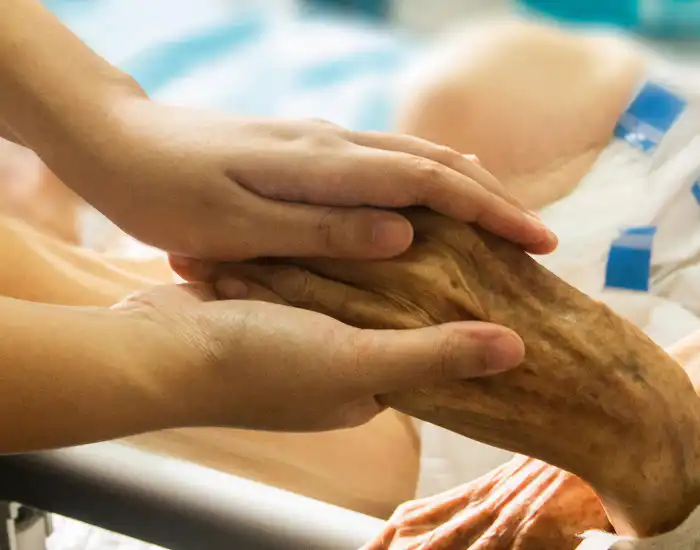
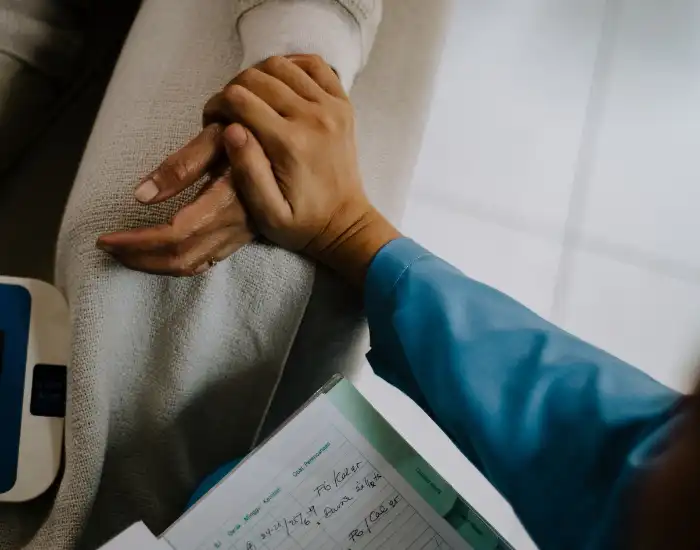
Many people describe feeling helpless, especially when communication decreases. However, one of the most important truths in end-of-life care is that presence itself is powerful. Sitting quietly, holding a hand, or simply being nearby can provide deep emotional comfort.
Hospice support also extends to families through counseling and bereavement care, helping them process grief before and after the loss. Services like family planning and decision support can also ease emotional and practical stress during this stage.
Hospice Care Support in Sugar Land and Houston
For families in Sugar Land, Houston, and surrounding Texas communities, access to compassionate hospice care can significantly improve the quality of end-of-life experiences. Local providers allow patients to remain in familiar environments, surrounded by family and personal memories.
Through in-home hospice care services, medical support, nursing visits, and emotional care are delivered directly to the home. This reduces hospital stress and allows families to focus on meaningful time together.
Some patients may also require more advanced support through palliative care services, especially when symptoms become complex or require frequent management adjustments.
Understanding financial and eligibility aspects early, such as who pays for hospice care, helps families make informed decisions without added pressure during emotional moments.
Frequently Asked Questions
1. How long does it take from signs that death is near to actual passing?
There is no exact timeline. For some individuals, it may be a few hours, while for others it may take days. Each person’s journey is unique.
2. Is it painful when death is near?
Not necessarily. With proper hospice care, pain and discomfort are carefully managed so the person remains as peaceful as possible.
3. Can someone still hear us in the final stage?
Yes, hearing is often one of the last senses to remain active, even when the person appears unresponsive.
4. Should we continue talking to them?
Yes. Speaking softly, sharing memories, and offering reassurance can be comforting for both the patient and the family.
5. What is the most important thing to do at this stage?
The most important thing is to provide presence, comfort, and emotional reassurance. Being there matters more than anything else.
Final Thoughts
Recognizing the signs that death is near can feel overwhelming, but it also provides families with the opportunity to prepare emotionally and be present in meaningful ways. While the physical changes may be difficult to witness, they are part of a natural process that the body follows at the end of life.
With the support of hospice professionals, families do not have to navigate this journey alone. Compassionate care focuses on dignity, comfort, and emotional support for everyone involved.
Whether through dedicated hospice teams or full-service end-of-life support, guidance is always available to help families through each step of this deeply important time.
Medical Disclaimer
This article is for educational purposes only and is not a substitute for professional medical advice. Always consult qualified healthcare providers for guidance regarding end-of-life care and medical decisions.