When Every Breath Feels Heavy: Dyspnea in Palliative Care Patients — 24/7 In-Home Support
Dyspnea in palliative care patients is the distressing sensation of shortness of breath that commonly occurs in advanced illness and end-of-life stages. As part of comprehensive palliative or end of life care , Sahara Hospice Care provides 24/7 in-home hospice support, bringing nurses directly to the patient’s home—day or night—to ease breathing discomfort, anxiety, and fear, while offering families the benefits of in-home hospice care in Houston, including comfort-focused treatment, emotional support, and care in a familiar environment.
Quick Facts for Families
- Breathlessness at end of life is common but can be comfort-managed at home
- Symptoms often include air hunger, chest tightness, and anxiety
- Available 24/7: Our team comes to your home any time of day or night
- Sahara Hospice Care handles medications, oxygen coordination, and family guidance
What Is Dyspnea in Palliative Care Patients?
Dyspnea—also spelled dyspnoea in palliative care—refers to the uncomfortable awareness of breathing difficulty. It is not just about oxygen levels; it is about how breathing feels to the patient.
In palliative care, dyspnea often appears in people with:
- Advanced cancer
- COPD or lung disease
- Heart failure
- Neurological conditions
- Late-stage frailty
Patients may describe it as:
- “I can’t get enough air”
- “My chest feels tight”
- “Breathing makes me panic”
Palliative management of breathlessness focuses on comfort—not curing the disease, but reducing suffering. With proper hospice support, many patients experience calmer breathing, reduced fear, and better rest at home.
The Experience: Real Stories From Families We Serve
A Family Facing Sudden Breathlessness at Home
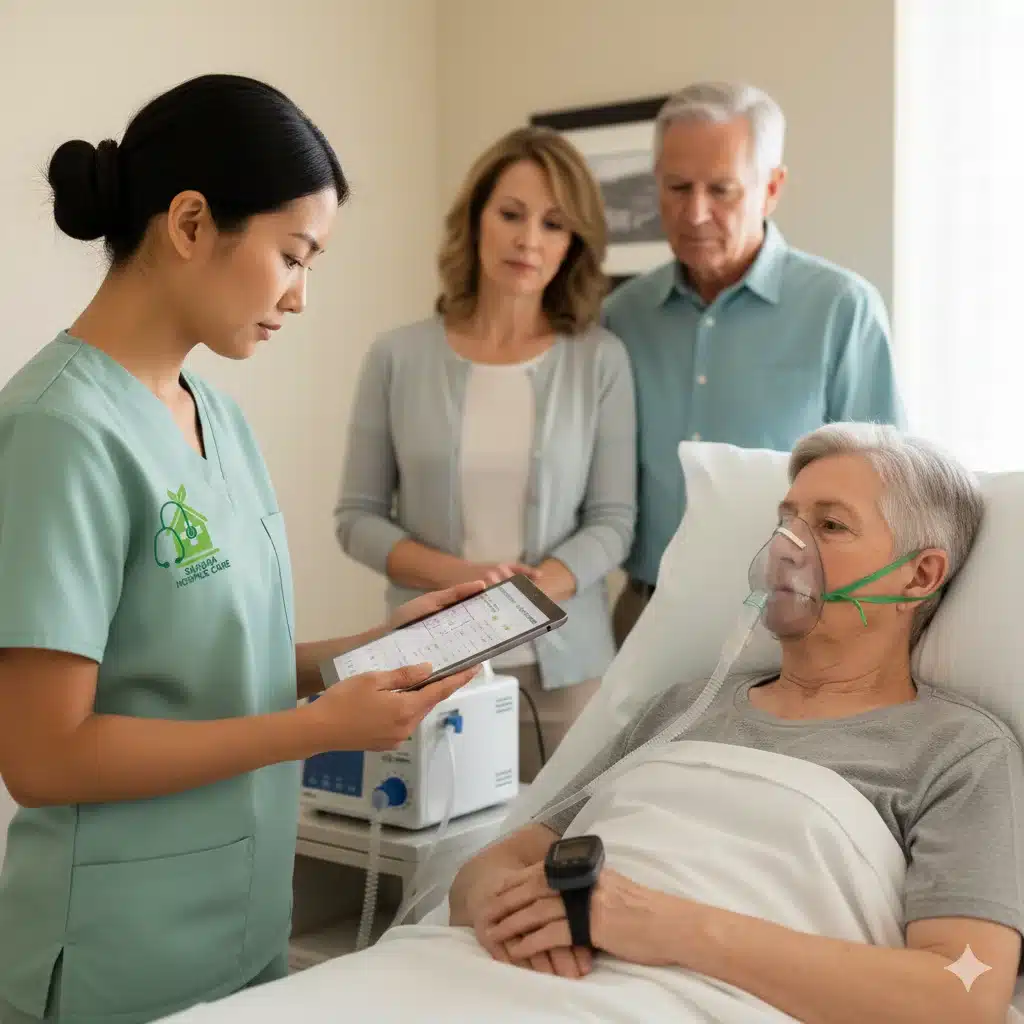
One evening, a family called Sahara Hospice Care when their father became suddenly short of breath. He was panicking, and the family feared calling 911.
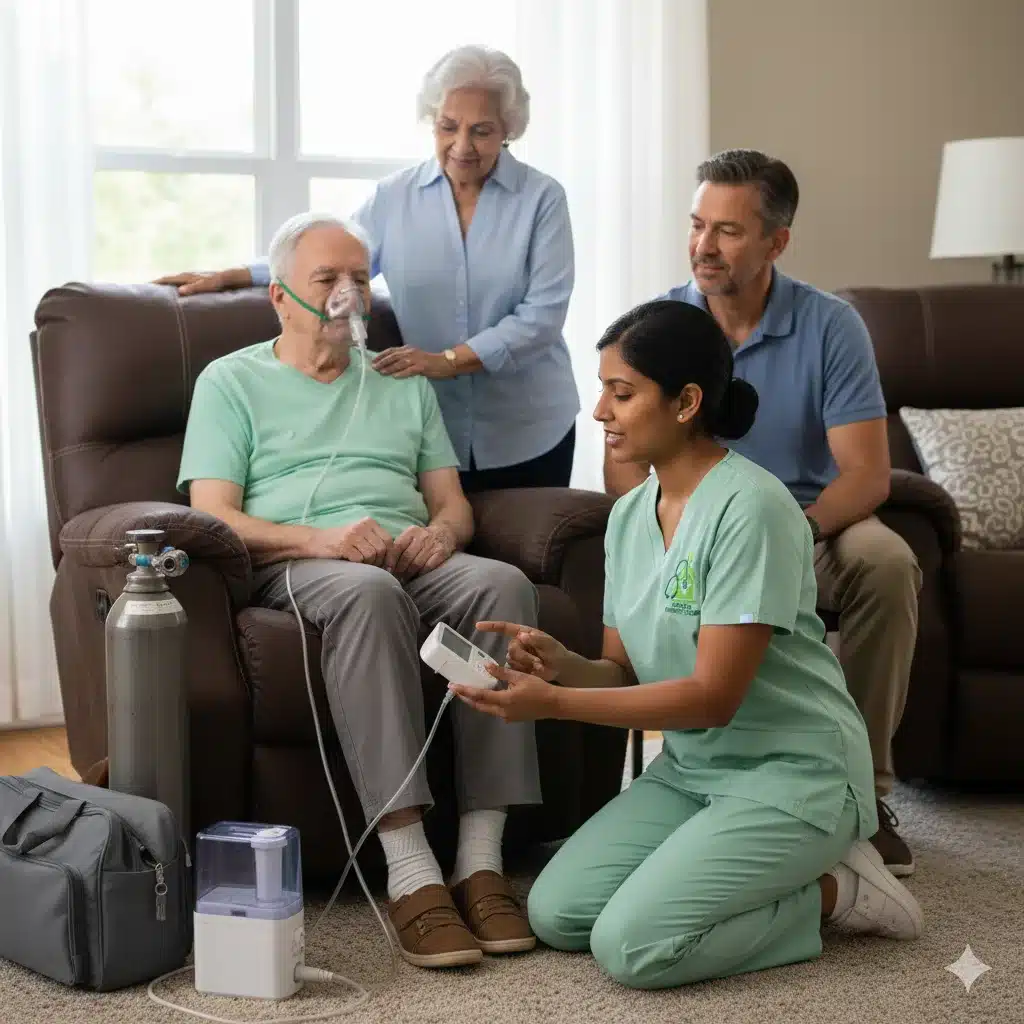
Within the hour, our hospice nurse arrived, assessed his breathing, adjusted medications, coordinated oxygen comfort, and coached the family on positioning and calm reassurance. His breathing eased. The room grew quiet again.
The family later told us, “We didn’t feel alone anymore.”
How Our Night Nurse Responded at 2 AM
At 2:00 AM, one of our nurses responded to an urgent call from a patient with advanced lung disease who woke gasping for air.
Our nurse arrived with a medical bag, adjusted comfort medications, monitored oxygen response, and stayed until breathing stabilized. This is what 24/7 hospice care truly means—we come to you, no matter the hour.
How Sahara Hospice Manages Dyspnea at Home
- Immediate Assessment
We assess breathing effort, anxiety level, positioning, and comfort—not just oxygen numbers. - Comfort-Focused Medication Management
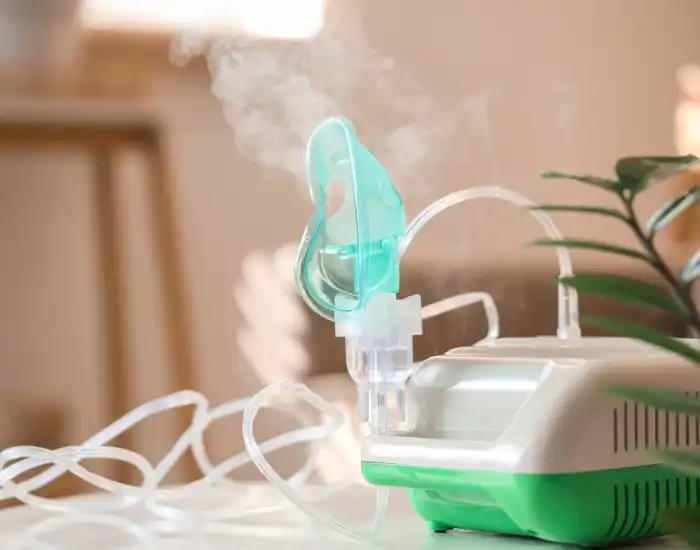
Carefully administered medications reduce air hunger and panic safely. - Oxygen & Equipment Coordination
We arrange oxygen delivery, humidification, and comfort devices when appropriate. - Positioning & Environment Support
Small changes—pillows, airflow, lighting—can greatly reduce distress. - Family Coaching
We teach families what to expect and how to respond calmly during episodes. - 24/7 On-Call Support
If symptoms worsen at night or on weekends, we come—no waiting, no confusion.
Insurance & Eligibility
Most dyspnea care under hospice is covered by Medicare, Medicaid, and many private insurance plans.
Frequently Asked Questions
Do you provide dyspnea care in palliative patients at home?
Yes. Sahara Hospice Care provides in-home dyspnea management across multiple communities, with nurses available 24/7.
How long does dyspnea last at the end of life?
Dyspnea may occur intermittently or persist during the final weeks or days of life. Hospice care helps manage symptoms even as the condition progresses.
What causes breathlessness at the end of life?
Common causes include advanced lung disease, heart failure, cancer progression, fluid buildup, muscle weakness, and anxiety related to serious illness.
How is dyspnea treated in palliative care?
Treatment focuses on comfort and may include medications, oxygen therapy, positioning, calming techniques, and continuous hospice nursing support at home.
What Is Breathlessness (Dyspnea)?
Breathlessness, also known as shortness of breath or dyspnea, is a common physical symptom where a person feels difficulty breathing or feels that they are not getting enough air. It can limit a patient’s ability to perform everyday activities such as walking, talking, eating, or resting comfortably.
Breathlessness is not only physical—it can also have a strong emotional and psychological impact. Anxiety, fear, or panic can worsen the sensation, creating a cycle where breathing becomes even more difficult.
How Does Breathlessness Affect a Patient’s Daily Life?
Breathlessness can affect patients differently depending on the cause and stage of illness. It may:
- Make patients constantly aware of their breathing
- Cause exhaustion even with simple activities
- Limit mobility and independence
- Interfere with sleep, eating, and speaking
- Reduce quality of life and emotional well-being
Breathlessness may occur:
- During activity (such as walking, climbing stairs, or bathing)
- At rest (while sitting or lying down), especially in advanced illness
How Do Patients Commonly Describe Breathlessness?
Patients describe breathlessness in many ways, including:
- A tight or heavy feeling in the chest
- Feeling like they must work harder to breathe
- A sensation of not getting enough air
- Needing to pause while speaking to catch their breath
Breathlessness can:
- Come on suddenly and last for a short time
- Develop gradually and worsen over weeks or months
- Be constant or occur in episodes (episodic breathlessness)
Is breathlessness common at the end of life?
Yes. Breathlessness is a common symptom in advanced illness and at the end of life, particularly in conditions affecting the lungs, heart, or muscles involved in breathing.
Can breathlessness be managed at home?
Yes. With hospice or palliative care, breathlessness can often be managed at home using medications, oxygen therapy, positioning, breathing techniques, and continuous nursing support.
Does anxiety make breathlessness worse?
Yes. Anxiety and fear can intensify breathlessness. Calming techniques, reassurance, and emotional support play an important role in symptom relief.
Is breathlessness always related to lung disease?
No. Breathlessness can also be caused by heart failure, cancer, fluid buildup, muscle weakness, infections, anemia, or anxiety—not just lung conditions.
When should breathlessness be considered an emergency?
Sudden or severe breathlessness, especially if accompanied by chest pain, confusion, or bluish lips or fingers, should be evaluated immediately by a healthcare professional.
24/7 Compassionate Hospice Support
Care doesn’t stop at 5 PM, and neither do we. As a provider of trusted in-home hospice care in Houston & Sugar Land , our compassionate team is available 24/7 to support families wherever they are.
24/7 Helpline: 281-245-9977
HQ Location: 140 Eldridge Rd, Suite B1, Sugar Land, Texas 77478
Email: info@saharahospicecare.com
Find us on Google Map
Author: Alan Jacob — Medical Writer.
Primary service areas: Sugar Land, Houston, Katy, Richmond, Pearland, Missouri City, Stafford, Cypress & surrounding areas.
Primary action: Call Sahara Hospice at (281) 245-9977 to schedule an in-home assessment.