
Anorexia during End of Life: Symptoms and Care Options

Compassionate Care for Anorexia End of Life – 24/7 Support
Anorexia end of life is a natural reduction in appetite and food intake seen in patients nearing the final stages of life. At Sahara Hospice Care, we provide End Of Life Care | Sahara Hospice Care with Hospice Compassionate Care, offering 24/7 in-home support to manage symptoms and comfort patients, ensuring dignity and relief for families.
Quick Facts for Families
- Available 24/7: Our team comes to your home any time of day or night.
- Symptom Support: We help manage end-of-life anorexia symptoms safely at home.
- Personalized Care Plans: Individualized care for patients with advanced illness.
- Insurance Assistance: We guide families through Medicare, Medicaid, and private pay coverage.
What Is Anorexia End of Life?
Anorexia in end-of-life care refers to the progressive loss of appetite and reduced food intake that often occurs when the body is shutting down. This is not necessarily harmful; it is a natural process and part of the body conserving energy.
Common end-of-life anorexia symptoms may include:
- Decreased interest in meals or refusal to eat.
- Fatigue or weakness that reduces the ability to eat.
- Weight loss over weeks or months.
- Emotional distress for both patient and family.
Management for anorexia in end-of-life focuses on comfort, hydration, and emotional support rather than forcing nutrition. At Sahara Hospice Care, we provide personalized interventions, such as:
- Gentle encouragement without pressure.
- Hydration support when needed.
- Symptom tracking to prevent distress from nausea or discomfort.
According to the CDC, providing comfort and emotional support is key in managing anorexia at the end of life.
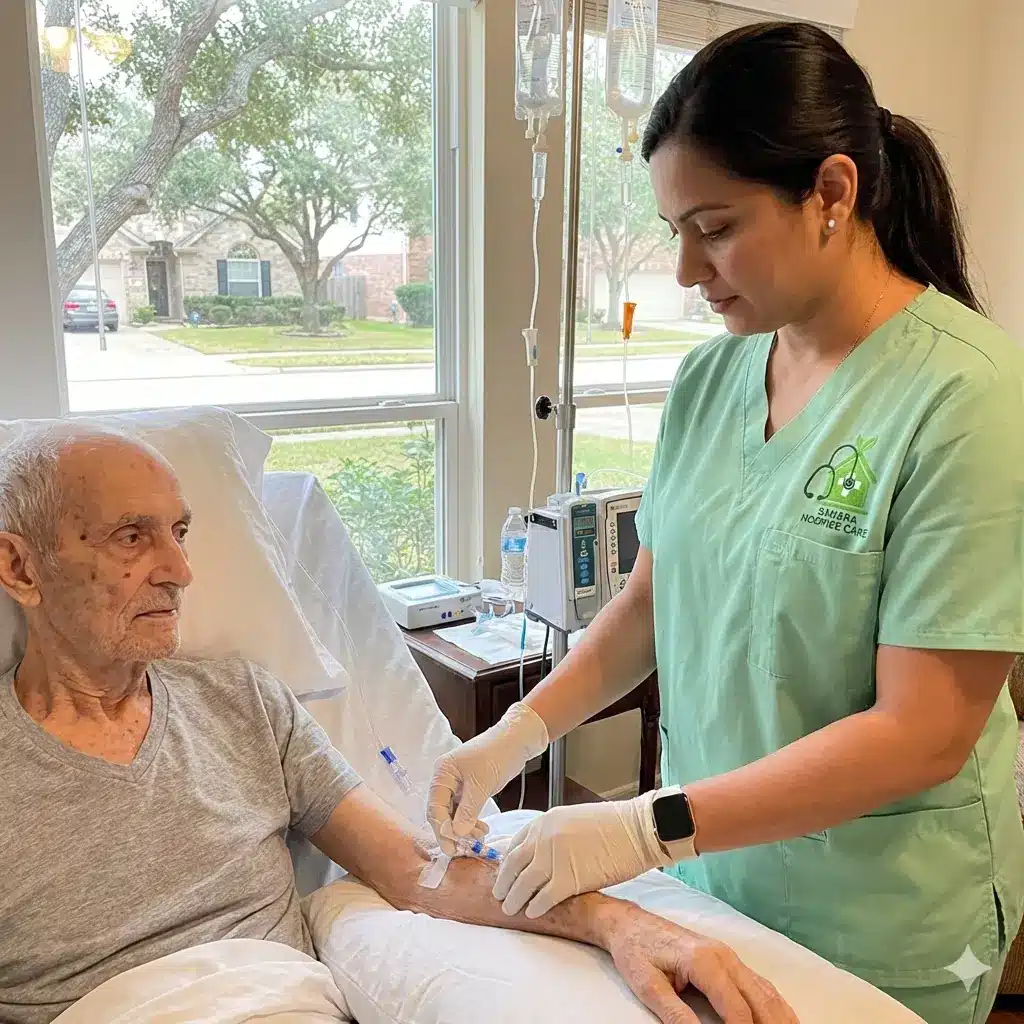
The Experience: Real Stories from Families We Serve
Scenario 1:
A family was struggling with their mother’s reduced appetite. Concerned about weight loss and weakness, they contacted Sahara Hospice Care. Our nurse arrived promptly, assessed her comfort needs, and developed a tailored plan to maintain hydration and minimize distress—allowing the family to focus on meaningful time together.
Scenario 2:
How our night nurse traveled at 2 AM to provide urgent comfort care. The patient had stopped eating and appeared anxious. Despite the hour, our nurse arrived, monitored vital signs, offered hydration support, and educated the family on what to expect—showing that true 24/7 support extends beyond office hours.
How Sahara Hospice Handles Anorexia End of Life
- Initial Assessment: Nurse visits the home and evaluates appetite, hydration, and overall comfort.
- Customized Care Plan: Individualized approach for nutrition and hydration support, aligned with family preferences.
- Symptom Management: Medications for nausea, dry mouth, or other discomforts when needed.
- Emotional Support: Counseling and guidance for patients and families.
- Continuous Monitoring: Regular check-ins, including overnight if required.
Every step is designed to reduce stress, maintain dignity, and prioritize comfort in the patient’s home.

Insurance & Eligibility
Sahara Hospice Care accepts Medicare, Medicaid, and private insurance plans. We help families:
- Navigate eligibility requirements.
- Complete paperwork efficiently.
- Understand coverage for 24/7 in-home services.
Frequently Asked Questions (FAQs)
Do you provide anorexia end-of-life services?
Yes. Our nurses are available 24/7 to provide in-home hospice support across multiple service areas.
What happens in the final stages of anorexia?
In the final stages of anorexia, the body slowly loses strength and energy.
Appetite becomes very low or disappears completely. The person may eat only a few bites
or stop eating altogether. Weight loss, weakness, increased sleep, and less interest in food
are common. This is a natural part of the body slowing down near the end of life.
When do hospice patients stop eating?
Many hospice patients stop eating days or weeks before death, though the timing is different
for each person. As the body begins to shut down, it no longer needs food in the same way.
This is not starvation but a normal and expected part of the dying process.
What is Stage 4 anorexia?
Stage 4 anorexia is a severe and advanced stage where appetite is almost completely gone.
The person may be extremely weak, very tired, and have significant weight loss.
At this stage, the body can no longer process food well, and care focuses on comfort
rather than forcing food.
What happens in the final stages of starvation?
In serious illness and end-of-life care, this process is better described as natural body
shutdown rather than starvation. The body uses less energy, organs slow down, and hunger fades.
The person may sleep more, talk less, and become less responsive. With proper hospice care,
this process is usually peaceful and not painful.
What are the 6 stages of anorexia at the end of life?
Families often notice these common changes as appetite decreases:
- Eating less than usual
- Loss of interest in favorite foods
- Difficulty chewing or swallowing
- Taking only small bites or sips
- Stopping solid foods
- Stopping eating completely
What happens when an elderly person stops eating?
When an elderly person stops eating near the end of life, energy levels decrease and sleep
increases. Hunger and thirst usually fade, and the body becomes weaker. This is a normal part
of the dying process and is often not distressing for the patient. Hospice care focuses on
comfort, mouth care, and emotional support for the family.
What is the typical management for anorexia in end-of-life care?
Our approach focuses on comfort, hydration, gentle encouragement, and symptom management tailored to each patient.
Can Sahara Hospice assist at night or on weekends?
Absolutely. We provide round-the-clock care to ensure your loved one is supported anytime.
Is there a risk if the patient refuses food?
End-of-life anorexia is a natural process. Our care is comfort-focused rather than forcing intake.
Do you coordinate with doctors or hospitals?
Yes, we work closely with physicians, hospitals, and family members to ensure a smooth, supportive experience.
Care Doesn’t Stop at 5 PM
Our compassionate team provides trusted in-home hospice care and is available 24/7 to support families wherever care is needed.
24/7 Helpline: 281-245-9977
HQ: 140 Eldridge Rd, Suite B1, Sugar Land, TX 77478
Email: info@saharahospicecare.com
Book a Consultation: Contact Us
Medical Disclaimer
Content for educational purposes only. Always consult a physician. Call 911 for emergencies.
Find Us on Google Map
Author: Alan Jacob — Medical Writer.
Primary locale: Sugar Land, Houston, Katy, Richmond, Pearland, Missouri City, Stafford, Cypress & surrounding areas.
Primary action: Call Sahara Hospice at (281) 245-9977 to schedule a local intake and home assessment.