Hospice memory care: Comfort-focused Support for Advanced Dementia
Hospice memory care combines end-of-life hospice services with specialized dementia support to improve comfort, dignity, and emotional safety for patients with advanced memory loss. In Sugar Land, Houston, and surrounding areas, this care model helps families and clinicians align symptom control with compassionate goals of care—often starting within 24–48 hours.
Hospice memory care is specialized end-of-life care for people with advanced dementia that focuses on comfort, symptom relief, and emotional support rather than cure. It integrates hospice services into memory care settings or the home to reduce distress and improve quality of life.
What is Hospice memory care?
Hospice memory care serves individuals with late-stage Alzheimer’s disease or other dementias who meet hospice eligibility criteria. Unlike traditional hospice alone, this approach adapts care plans to cognitive decline, communication limits, and behavioral symptoms. As a result, patients receive tailored pain management, anxiety reduction, and dignity-preserving support.
Importantly, hospice in memory care settings also supports caregivers and clinical teams. Nurses, DONs, and personal caregivers gain guidance on non-verbal pain cues, comfort feeding, and end-of-life transitions.
Hospice in memory care vs. standard hospice
While both prioritize comfort, hospice in memory care adds dementia-specific expertise. For example, care teams focus on minimizing agitation, maintaining familiar routines, and using gentle communication techniques. Therefore, patients experience fewer distressing episodes and more consistent comfort.
Additionally, memory care–trained hospice staff collaborate closely with facility teams or home caregivers. This coordination reduces unnecessary hospitalizations and improves care continuity.
When to consider memory care and hospice near me
Families often ask when it’s time to explore memory care and hospice near me. Common indicators include:
- Advanced dementia with limited verbal communication
- Frequent infections or hospitalizations
- Difficulty swallowing or significant weight loss
- Increased agitation or pain despite treatment
If these signs are present, early hospice involvement can improve comfort and support decision-making.
Benefits for caregivers, nurses, and DONs
Hospice memory care eases the clinical and emotional burden on care teams. First, hospice clinicians provide expert symptom management and 24/7 on-call support for families seeking Dementia Home Care in Sugar Land . Second, they offer education on dementia progression and end-of-life signs.
Consequently, caregivers feel more confident, and patients receive consistent, compassionate care aligned with best practices and local dementia home care standards in Sugar Land.
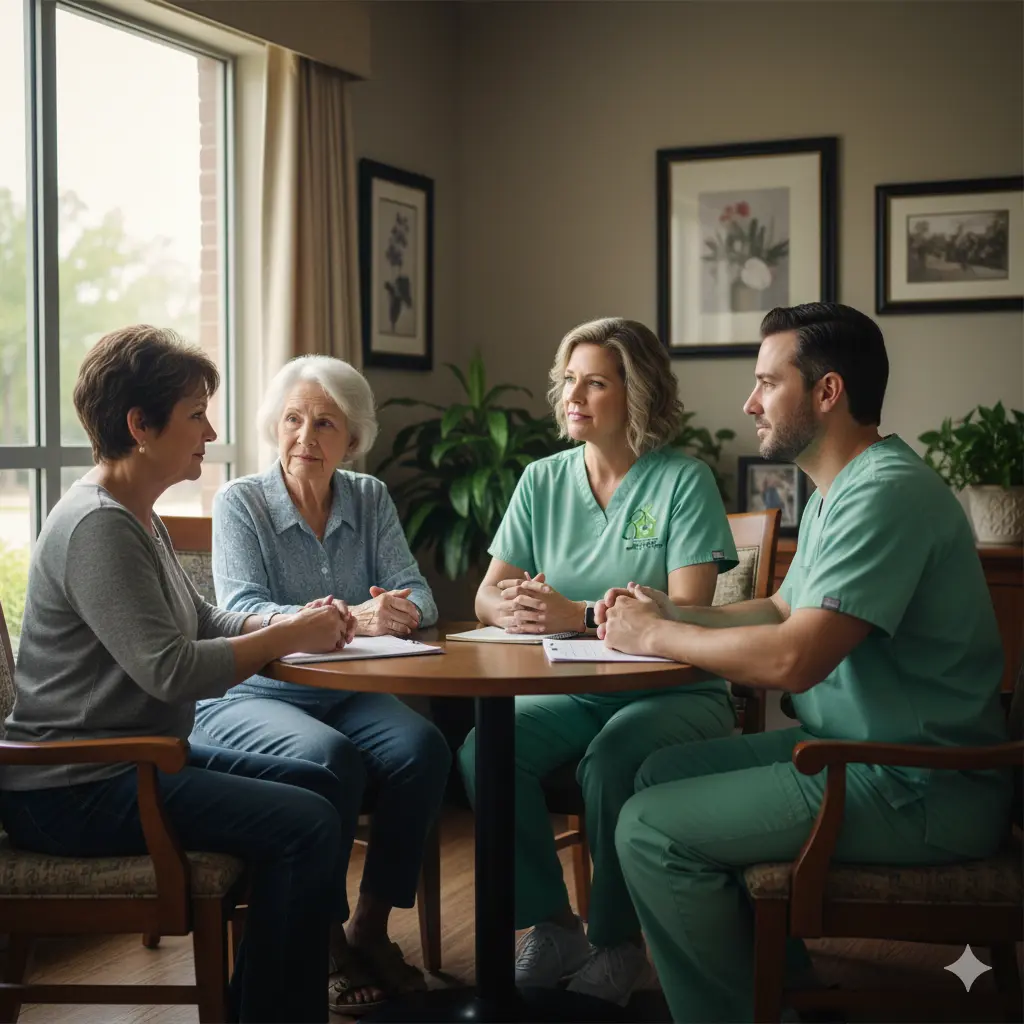
Illustrative Examples
The examples below are composites written to illustrate how hospice and palliative care can help. They do not describe actual Sahara Hospice Care patients, and every person’s care plan and experience is different.
Case Study 1 (4 weeks): An 82-year-old woman with advanced Alzheimer’s experienced daily agitation and poor sleep. After hospice memory care enrollment, her care plan emphasized comfort medications and routine consistency. Within two weeks, agitation episodes dropped by 60%, and family reported calmer evenings.
Case Study 2 (6 weeks): A male patient with vascular dementia had repeated ER visits for infections. Hospice in memory care shifted goals to comfort and in-place treatment. Over six weeks, hospitalizations stopped, and pain scores improved, allowing peaceful time with family.
How Sahara Hospice Care supports hospice memory care
Sahara Hospice Care partners with families, nurses, and facilities across Sugar Land and Houston to deliver responsive, dignity-centered hospice memory care, including specialized Alzheimer’s and Dementia Care . Our interdisciplinary team focuses on comfort, emotional support, and clear communication to support patients and caregivers at every stage.

Clinical guidance and evidence-based approach
National organizations emphasize comfort-focused care for advanced dementia. According to the National Institute on Aging, hospice can reduce symptom burden and improve quality of life for patients and families facing late-stage dementia.
National Institute on Aging – Hospice Care Rationale: Provides authoritative, evidence-based guidance on hospice care for dementia.
Frequently asked questions
Is hospice memory care only for Alzheimer’s disease?
No. It supports advanced stages of Alzheimer’s, vascular dementia, Lewy body dementia, and other progressive cognitive disorders.
Can hospice be provided inside a memory care facility?
Yes. Hospice teams work alongside facility staff to deliver coordinated comfort-focused care.
How quickly can services start?
In many cases, hospice memory care can begin within 24–48 hours after eligibility is confirmed.
Does hospice memory care replace existing caregivers?
No. Hospice complements existing care by adding specialized clinical, emotional, and spiritual support.
Who qualifies for hospice memory care?
Patients with advanced dementia and a physician-certified life expectancy of six months or less if the disease follows its usual course.
Is support available for families?
Yes. Hospice includes counseling, education, and bereavement support for families and caregivers.
Call Sahara Hospice Care today
If you’re caring for someone with advanced dementia, hospice memory care can bring comfort and clarity. Call 281-313-0085 to speak with our team or visit us at 140 Eldridge Rd, Suite B1, Sugar Land, Texas 77478. You may also email info@saharahospicecare.com or visit saharahospicecare.com.
Find us on Google Map
Author: Alan Jacob — Medical Writer.
Call Sahara Hospice at (281) 313-0085 to schedule a local intake and home assessment.
More Guides on This Topic
Reviewed by the Sahara Hospice Care Team · Last reviewed: October 18, 2026
Related Hospice Care Resources
References
- Dementia — MedlinePlus, U.S. National Library of Medicine
- Late-Stage Caregiving — Alzheimer's Association
- Hospice Care — MedlinePlus, U.S. National Library of Medicine
Medical disclaimer: This article is for general educational purposes only and is not medical advice. It does not replace a consultation with a physician or a patient’s own care team. Hospice eligibility and coverage depend on each person’s situation. In an emergency, call 911. For questions about hospice care in Sugar Land or Greater Houston, call Sahara Hospice Care at (281) 313-0085.